
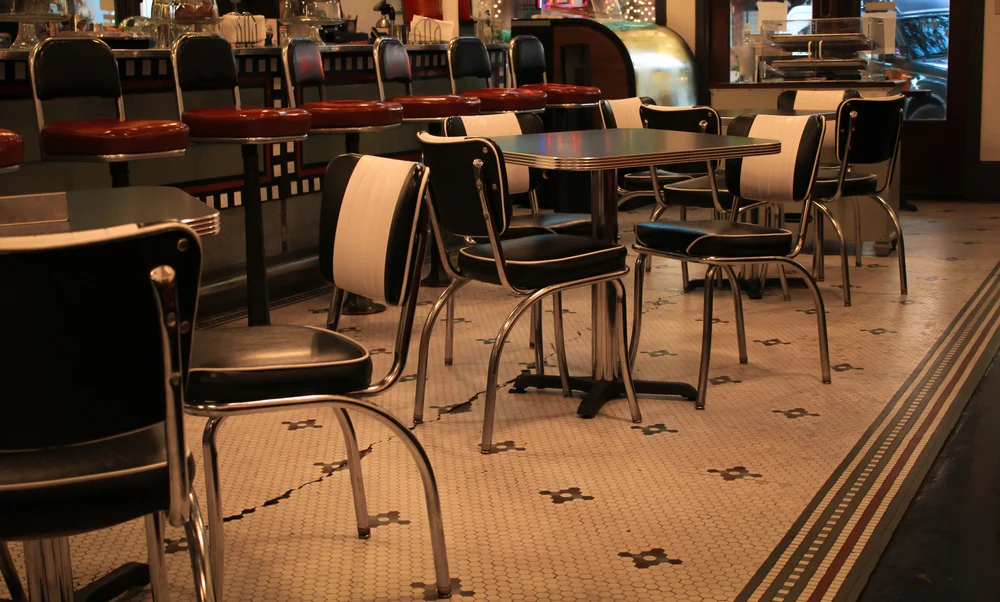
It might seem like an odd topic, but it actually presents an interesting look at restaurant sanitation history. As it turns out, white tiles were more than a decorative choice. Yes, they looked great and added a nice glow to the room but there’s a deeper reason why early restaurants used white tile and why it remains common today.
When Did Restaurants First Start Using White Tile?
White tile became popular around the turn of the 20th century because it promised something that customers increasingly wanted from public dining areas: visible cleanliness. At this time, cities were quickly expanding. Food service was also growing and the science of what was called “germ theory” was catching on. Therefore, restaurants that looked clean were presumed clean and that gave those particular eateries a sudden competitive advantage.
Why Early Restaurants Chose White Tile
Another reason why early restaurants used white tile was because it was easier to clean than previously used surfaces. Older materials like wood floors, plaster walls, smoke-stained rooms and greasy surfaces were falling out of favor. They were unattractive and proved difficult to sanitize. By contrast, tile was hard, smooth and nonporous. It could be easily wiped down and sanitized or at least given the appearance of cleanliness. And just like that, visible cleanliness became part of restaurant design.
The white tile look became especially important for quick-service restaurants. Early restaurant chains like Childs and Thompson’s were gaining momentum, helping make white tile a defining feature of the modern lunchroom.” Those interiors often paired white tiles with marble or porcelain counters, plate glass windows, electric lighting and white uniforms. Everything was aglow and fresh with the suggestion of cleanliness as there was nary a place for a stain to hide.
White Tile’s Role Beyond Hygiene
Here’s another fun reason as to why early restaurants used white tile. The tile itself helped with a practical lighting problem. Glossy tile reflected natural and electric light with ease. This made small rooms appear larger, cleaner and, as a result, more inviting for patrons. A well-lit, well-tiled room was simply more trustworthy than darker, less confidence-inspiring dining spaces. That brightness also helped communicate cleanliness and modernity to early 20th-century diners.
White Tile, Beyond Dining
This same association between white surfaces and cleanliness spread across public and commercial spaces. Hospitals, bathrooms, butcher shops and even subway stations embraced bright, washable surfaces, helping make white tile part of the public “language” of hygiene.
These days the importance of hygiene cannot be overstated. Restaurants, pubs and other venues that offer dining options not only rely on proper sanitation but they must submit to an entire industry of sanitary checks and balances. If you’re stepping into the hospitality business, you now know something most don’t know about restaurant sanitation history.
You’re also exactly where you need to be to further that education through proper training and certification. Here at American Course Academy, we can get you quickly certified, often in as little as a few hours and from the convenience of your own home or workplace. View our supported states for food handler training and enroll in minutes.