
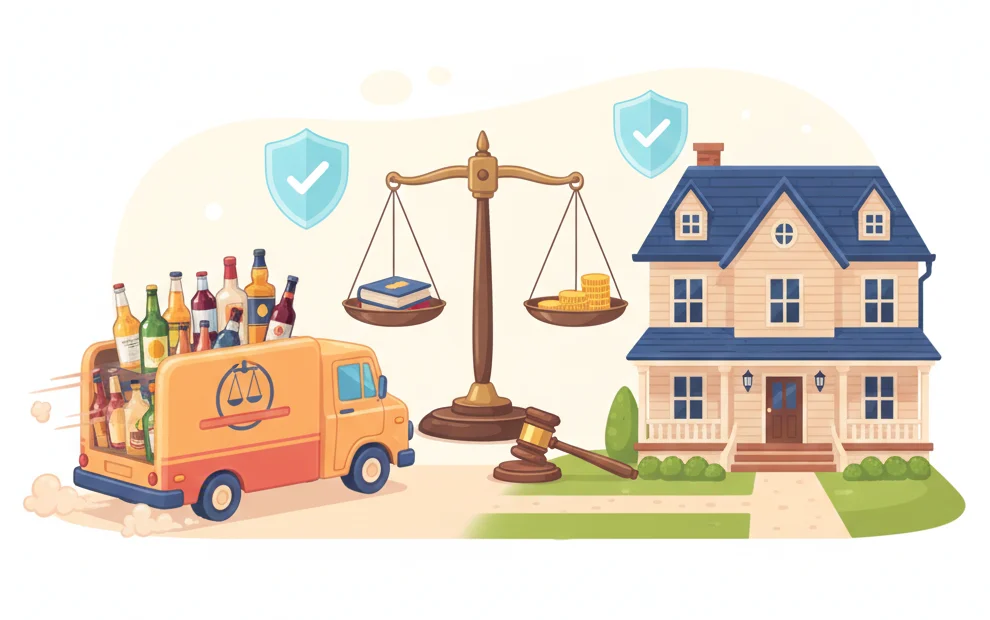
“At-home” product delivery and services have skyrocketed since COVID. There are increasing opportunities to simply have the world brought to you without having to step away from your front door. Therefore, it should come as no surprise that home alcohol delivery services have surged in popularity. However, the legalities surrounding home alcohol delivery are complex and you might be surprised by how much it can vary from state to state. Let’s explore the legal responsibilities that you should be aware of when it comes to providing home delivery services.
Make Sure You are Licensed for Home Alcohol Delivery
Your foremost responsibility is to be sure that you have the appropriate alcohol licenses and permits. When it comes to alcohol delivery laws, you should know that there are a host of federal and state regulations that overlook the process. In many states, a separate license is required for home alcohol delivery.
If you deliver alcohol without the proper license and permits, you could face hefty fines and even the dismissal of your in-store license. Failure to comply could also result in criminal charges. Tapping into the home alcohol delivery service could be a lucrative business decision, but make sure that you don’t leap in without being aware of your local laws for licensing.
Age Verification is Key
Long gone are the days when dad sends junior to the store to grab a six-pack. Yes, that actually happened. Today, preventing minors from drinking or accessing alcohol is mandatory at every turn. Businesses that engage in home alcohol delivery must ensure that these laws are enforced. This responsibility extends to both points of sale: as the order is placed for delivery, and the delivery itself.
Home alcohol delivery vendors must know how to use remote age verification systems. This can involve using software solutions that require potential customers to submit a valid government ID before completing a purchase. The process for checking IDs varies by location, but alcohol delivery will require proof of age at drop off.
Transportation Regulations You Need to Be Aware of
Home alcohol delivery obviously involves the transport of booze and that also must adhere to certain regulations. Rules are in place to prevent tampering, to ensure product integrity and to minimize risks associated with moving alcohol across a city or even a state, if ordered from a non-local business.
Depending on your location you should expect to have those deliverables properly packaged and labeled with information that includes the contents and possibly the seller’s licensing information. Restrictions could also include vehicle types and delivery routes.
You should also note that some states prohibit the delivery of certain kinds of alcohol. This typically means that booze over a certain percentage, such as hard liquors, might not qualify for delivery. Other states might mandate alcohol to be transported separately from other goods. Some state laws insist that drivers keep alcohol locked in containers and out of reach while driving. There are variables from state to state, so obviously it will fall upon the licensed operator to know and comply with those laws.
Third-Party Attachments and What They Mean to You
There are a number of ways in which home alcohol delivery can be completed. If ordered locally, then a local vendor would likely deliver it directly to you. If ordered online then it’s more than likely that a third-party vendor will be involved. This means making use of other delivery platforms such as the USPS, UPS or FedEx. This is when liability with alcohol delivery laws can become a complex issue.
Third-party vendors will absorb the legal responsibility for delivery. This means that those drivers will be held accountable for verifying age and possibly refusing delivery to intoxicated recipients. Both parties could be held liable for any violations depending on the circumstances and applicable laws. The recommendation here is for a licensed operator to draft agreements with third-party vendors in order to minimize liability and establish protocols for home alcohol delivery.
Marketing Compliance Issues
Advertising and marketing of home alcohol delivery is highly regulated. Federal and state laws prohibit false advertising and restrict the promotion of booze to those who are underage. Marketing to an underage audience can be inadvertent. It is your legal responsibility to ensure you are only advertising your alcohol delivery service to adults. One mistake and you might be hearing from the Federal Trade Commission and Alcohol and Tobacco Tax and Trade Bureau.
Protect Privacy and Data
Home alcohol delivery services will often be responsible for handling sensitive customer information. This can include payment details and addresses. It is the responsibility of the business owner to comply with all privacy laws on both a state and federal level. This will involve providing clear privacy notices as well as securing customer information and responding quickly to any potential data breaches. Delivery personnel should also be trained on privacy protocols in order to protect your business against potential trust issues or legal action.
If you are a business owner who operates a home alcohol delivery service then you need to be sure your staff is up to date on all current state and federal laws. Many states will require a state-approved training and certification program.
Here at American Course Academy, we can help you achieve those certifications quickly and affordably. Our alcohol seller and server courses are offered in both English and Spanish and can often be completed in a couple of hours. We have several supported states including Texas, California, Utah, Oklahoma and Florida with many more being added. View our list of supported courses and enroll online in minutes.