
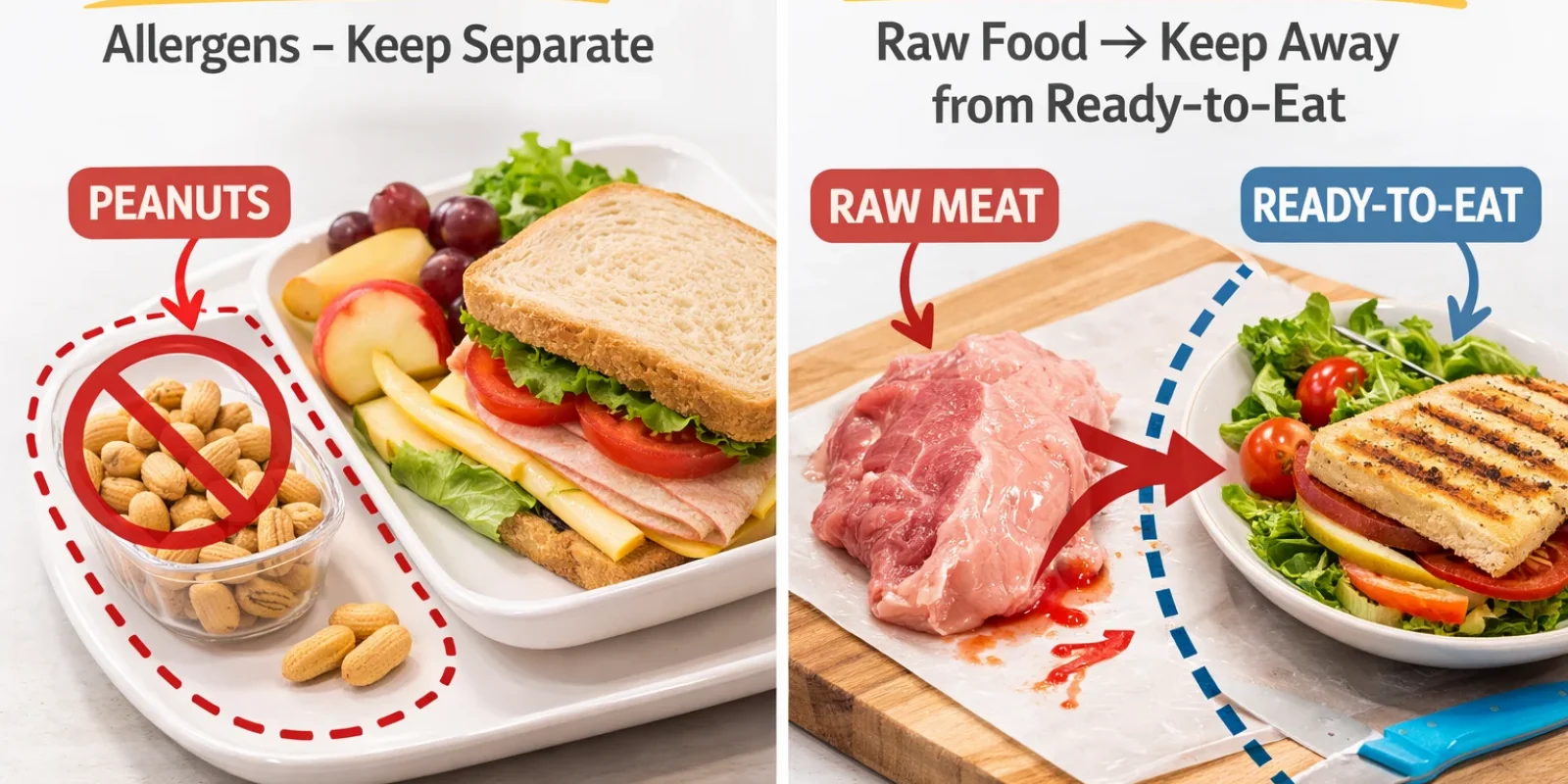
The right food safety training course will make a clear and technical distinction between what is known as cross-contact and cross-contamination. When it comes to your training, understanding that difference can be critical. The FDA and other like-minded organizations put a strong emphasis on this distinction because the risks and preventative measures are often quite different. We’ve covered cross-contamination in detail before, now it’s important to look at how food safety training defines cross-contact vs. cross-contamination.
What is Cross-Contact?
Cross-contact refers to the unintentional transfer of allergens from one food surface to another. This is a major concern for individuals who suffer from specific food allergies. Even the tiniest trace of an allergen can trigger a severe, potentially life-threatening reaction. Also worth noting is that allergens, unlike bacteria, are not easily neutralized by cleaning or cooking. This makes cross-contact prevention unique from cross-contamination prevention and understanding the distinction even more critical.
Allergen cross-contact can occur when a food that is allergen-free comes into contact with food, surfaces, utensils or even gloves that have been exposed to allergens. As an example, if you were to use a spatula on a cheese sandwich and then on a dairy-free food product without properly cleaning it, then you would have an allergen cross-contact situation. Using the same knife to cut a peanut butter sandwich before cutting a peanut-free sandwich without cleaning is another instance where cross-contact can occur.
Training programs should emphasize the importance of allergen cross-contact because it needs to be approached differently than containing and neutralizing bacteria. According to the Center for Disease Control, food allergies affect an estimated 15 million people in the United States. This is why allergen cross-contact awareness is so important when it comes to working in the hospitality industry.
Defining Cross-Contamination
Like allergen cross-contact, cross-contamination has to do with the transference from one surface to another. When it comes to cross-contamination, this can mean bacteria, viruses and even parasites. The transfer can involve a simple prep surface or food ingredient as well as any nearby tools or equipment used for prepping food.
Direct transfer can happen quickly, especially when it comes to the handling of raw meats and meat juices that can drip onto ready-to-eat foods. Another example of cross-contamination might involve using unwashed cutting boards when preparing raw chicken and then salad vegetables or anything with preparation that does not involve heat or other food-safety measure. The USDA tells us that cross-contamination is one of the foremost causes of foodborne illnesses and that’s why it is a big concern when it comes to prepping food in a commercial kitchen or at a public venue.
There are two noteworthy types of cross-contamination. The first type is Direct Cross-Contamination. This occurs when bacteria is transferred directly from one food source to another. This would include placing cooked food on an unwashed plate that previously held raw meat.
Indirect Cross-Contamination can occur when bacteria is transferred by way of an intermediate or secondary object such as unclean hands, utensils or countertops that come in contact with contaminated food.
When it comes to cross-contamination, your food safety training should focus on potential contamination issues that might involve the movement of biological hazards. Topping that list would be raw animal products. Unwashed produce, contaminated water and improperly cleaned utensils and surfaces are also high on that list of biohazards. Proper training will help you to understand the true importance of recognizing high-risk scenarios and the potential consequences of unsafe food handling.
Training programs centered around cross-contamination should also highlight the importance of proper handwashing as well as frequent cleaning and sanitizing of all kitchen surfaces, utensils and tools. Correct food storage is also essential when it comes to preventing cross-contamination.
As an example, if meat is not kept at a proper temperature, then this could cause raw meat contaminants to transfer to other foods stored in the same container. Improperly stored foods can quickly catch a business owner off-guard. Even with a perfectly sanitized kitchen and properly trained cooks and food servers, foods that are not stored appropriately can result in foodborne illnesses. This means health department checks, fines or even a temporary shutdown of your venue or facility.
Cross-Contact vs Cross-Contamination: A Quick Summary
Cross-contamination involves biohazards such as bacteria, viruses and parasites. Cross-contact involves chemical hazards such as allergens which call for strict separation and thorough cleansing. Bacteria are more easily removed while some allergens are able to survive heat and cleaning.
As for prevention, cross-contamination can be thwarted in a number of ways. Clean hands are essential. Be sure to use separate cutting boards for separate foods, especially when it comes to prepping raw foods. Clean and sanitize all surfaces after use and store food properly. Keep meats below those other prepared or ready-to-eat ingredients.
As for allergen cross-contact prevention, be sure to use dedicated instruments and utensils when prepping allergen-free foods. Clean and sanitize all surfaces thoroughly between use. Store allergen-free foods separately from foods that contain allergens. You must also be sure to be transparent with ingredients for prepared meals to bring awareness to a potential allergen risk.
Conclusion
Understanding the differences between allergen cross-contact and cross-contamination is essential for all food handlers and anyone else who might be involved in food preparation. If you’re ready to become a certified food handler or you need to renew your existing certification, let American Course Academy help you reach the next level in your career. Check our home page to see which states we’re currently offering food handler training in.
Our state-approved food safety training can be finished in under two hours. Training is available in both English and Spanish and your certification will be immediately available to download and print or display. Get started today!