
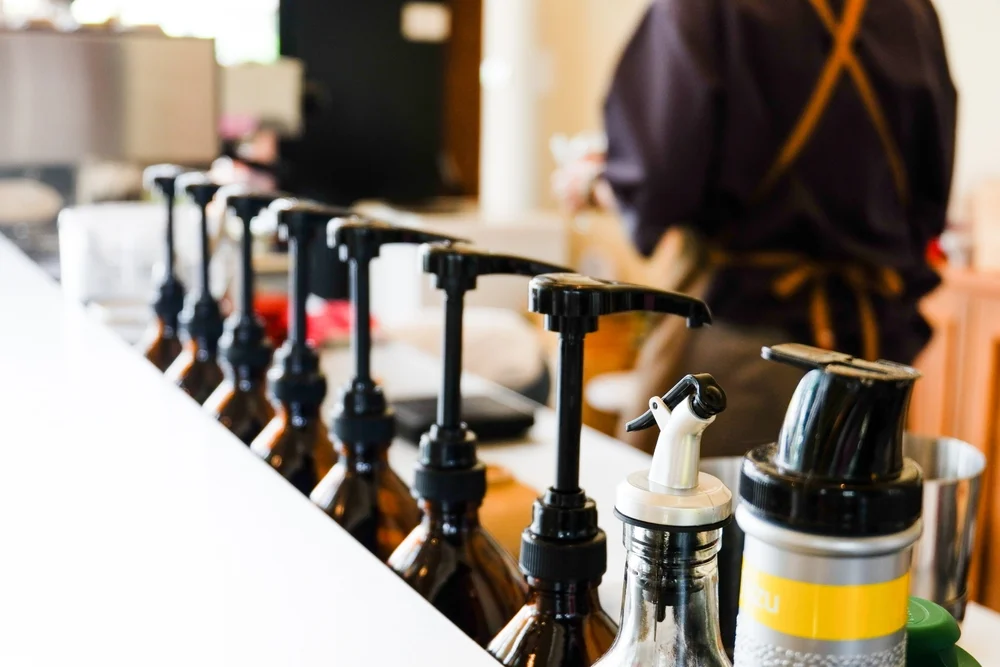
If left unchecked, syrup pump sanitation can become a real concern. Yes, these pumps which are used throughout the day and by multiple staff members do make operations more efficient. However, this convenience comes with concern: syrup pumps can become reservoirs for bacteria and mold if they are not properly cared for. Let’s take a moment and explore the microbial world of syrup pump sanitation.
The Silent World of Syrup Pump Germs
The principal reason that syrup pump sanitation is so important is because syrup pumps are susceptible to harboring germs by design alone. The ingredients that pass through those pumps are also a concern. As you likely well know, syrups are high in sugar which bacteria and molds crave.
Over time, sticky residue will accumulate on the syrup pumps, especially in those hard-to-clean crevices. When exposed to room temperatures for days or even just a few hours, that moist, high-sugar environment can quickly attract microorganisms. Even with the best intentions, it’s easy for germs to gather on hands or gloves and then transfer to those sugar-rich pumps. As staff members come and go, the risk of cross-contamination rapidly increases.
Barista Hygiene is a Front-Line Defense
To address this fast-growing concern, baristas and managers alike should establish and follow a regular cleaning schedule. Yes, the immediate thought is that a daily clean is called for. However, when it comes to individual barista hygiene the recommendation is to actually rinse and clean syrup pumps at the end of each shift.
If you’re serious about syrup pump sanitation, then you or your staff will know how to fully disassemble the tool and clean each component including the straw, spring and nozzle. These items should be soaked in hot, soapy water to loosen the sticky residue. After a good soak, the syrup gun components should then be scrubbed and rinsed clean.
In addition to cleaning the pumps, barista hygiene should also involve wiping down syrup bottles and any surface areas around the pump. Sticky residue from a spill or even something as simple as a splash can accumulate on surfaces which, of course, attracts pests. That fosters additional microbial growth.
Good hand hygiene is a must when it comes to preventing syrup pump germs from accumulating. Be sure to wash hands regularly and wear gloves or personal protection equipment (PPE) when appropriate. Training all staff on these routines helps to foster a culture of cleanliness and accountability.
If you are ready to up your barista game with a state-approved food handling or alcohol server certification then let us show you just how easy and affordable it can be. Here at American Course Academy, you can get certified quickly, often within a single day and our training materials are available in both English and Spanish. Find if your state is supported and get enrolled in minutes.